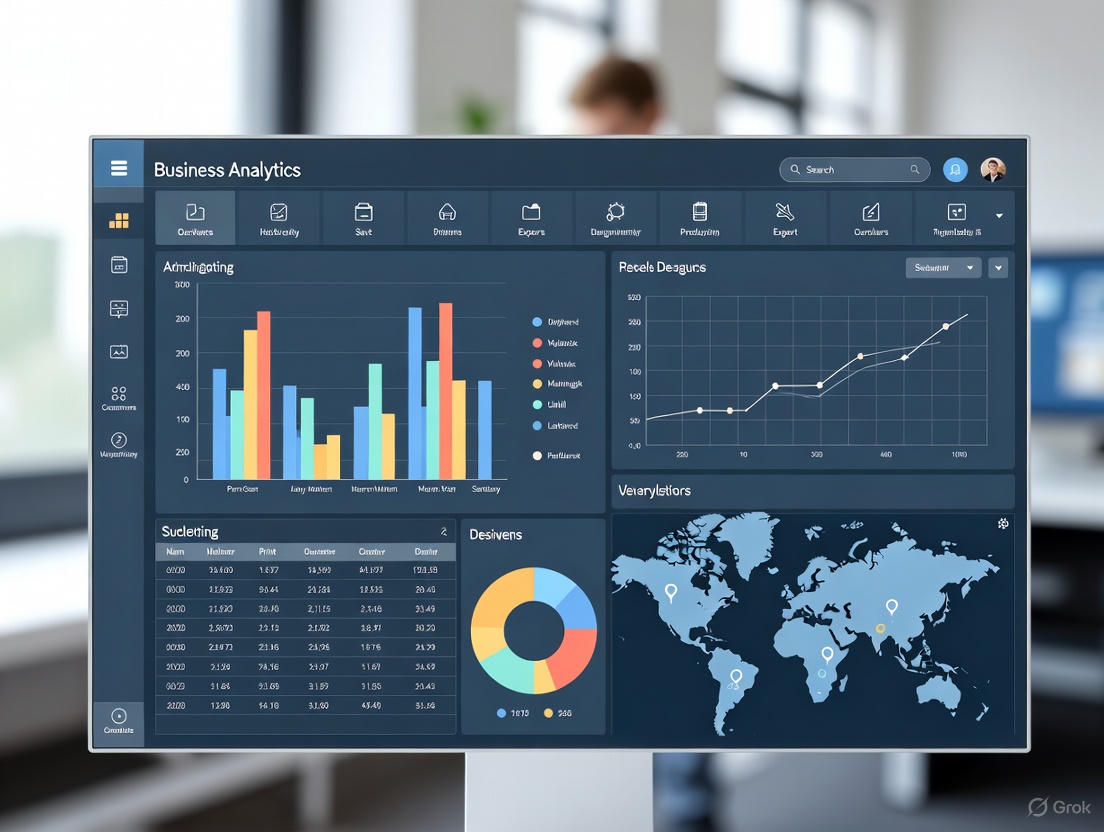
Introduction to Business Analytics Software
Business analytics software has become an essential tool for modern organizations that want to compete in a data-driven economy. Companies generate massive amounts of data every day, but raw data alone has little value unless it is analyzed and transformed into actionable insights.
In the first 10% of this article, it’s important to establish that business analytics software enables businesses to understand trends, predict outcomes, and make informed strategic decisions. From startups to global enterprises, organizations rely on analytics software to improve efficiency, profitability, and customer satisfaction.
What Is Business Analytics Software?
Business analytics software refers to digital tools and platforms that collect, process, analyze, and visualize business data. These tools help decision-makers understand what is happening in their business and why it is happening.
In simple terms:
Business analytics software turns data into insights that support smarter decisions.
It integrates data from multiple sources such as databases, cloud applications, spreadsheets, and enterprise systems, presenting results through dashboards, reports, and visualizations.
Why Business Analytics Software Matters Today
In today’s competitive environment, intuition alone is not enough. Business analytics software matters because it enables:
- Evidence-based decision making
- Faster response to market changes
- Improved operational efficiency
- Better understanding of customer behavior
Organizations that use business analytics software gain a competitive advantage by identifying opportunities and risks before others do.
Types of Business Analytics Software
To fully understand business analytics software, it helps to know its main categories.
1. Descriptive Analytics Software
Focuses on understanding past performance using historical data.
2. Diagnostic Analytics Software
Analyzes data to identify why certain outcomes occurred.
3. Predictive Analytics Software
Uses statistical models and machine learning to forecast future trends.
4. Prescriptive Analytics Software
Recommends actions based on predicted outcomes.
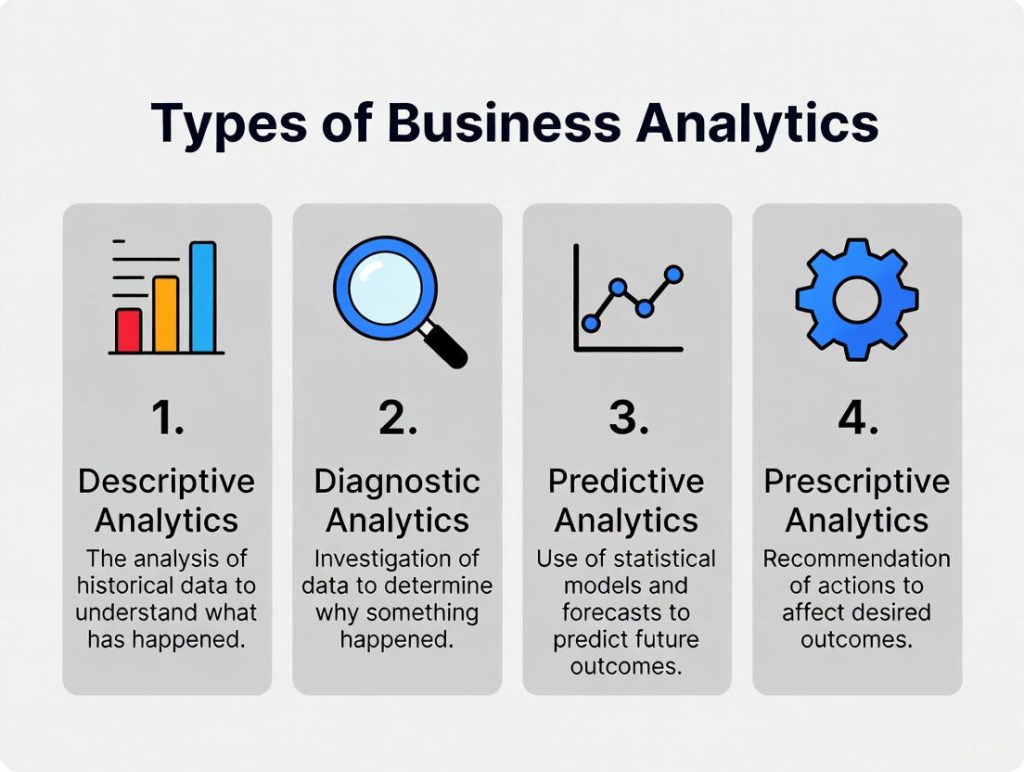
Each type of business analytics software serves a specific purpose, and many modern tools combine all four.
Key Features of Business Analytics Software
Effective business analytics software includes a range of powerful features.
Core Features
- Data integration from multiple sources
- Interactive dashboards and reports
- Data visualization (charts, graphs, heat maps)
- Real-time analytics
- Self-service analytics for non-technical users
Advanced Features
- Predictive modeling
- AI-driven insights
- Natural language queries
- Automated reporting
These features help organizations extract maximum value from their data.
Benefits of Business Analytics Software for Organizations
Business analytics software delivers measurable benefits across all business functions.
Key Benefits
- Improved decision accuracy
- Increased operational efficiency
- Better financial forecasting
- Enhanced customer experience
- Reduced business risks
By using business analytics software, organizations can move from reactive decisions to proactive strategies.
Business Analytics Software Use Cases by Industry
Business analytics software is used across many industries.
Retail
- Demand forecasting
- Customer behavior analysis
- Inventory optimization
Finance
- Risk assessment
- Fraud detection
- Financial performance tracking
Healthcare
- Patient outcome analysis
- Resource utilization
- Predictive care planning
Manufacturing
- Supply chain optimization
- Predictive maintenance
- Quality control

These use cases highlight the versatility of business analytics software.
Business Analytics Software vs Traditional Reporting Tools
Many organizations still rely on traditional reporting tools, but business analytics software offers clear advantages.
| Feature | Traditional Reporting | Business Analytics Software |
| Data Updates | Periodic | Real-time |
| Interactivity | Limited | Highly interactive |
| Predictive Capabilities | None | Advanced |
| Decision Support | Basic | Strategic |
Business analytics software enables deeper insights than static reports.
How to Choose Business Analytics Software (HowTo Schema Section)
HowTo: Select the Right Business Analytics Software
Step 1: Identify business goals and analytics needs
Step 2: Evaluate data sources and integration requirements
Step 3: Compare features and scalability
Step 4: Assess ease of use and training needs
Step 5: Review pricing, support, and security
Following this HowTo framework ensures you choose business analytics software that aligns with your organization’s objectives.
Implementation Challenges and Solutions
Despite its benefits, implementing business analytics software can present challenges.
Common Challenges
- Data quality issues
- Resistance to change
- Lack of analytics skills
- Integration complexity
Solutions
- Clean and standardize data
- Provide user training
- Start with pilot projects
- Choose scalable platforms
Addressing these challenges ensures successful adoption.
Role of AI and Automation in Business Analytics Software
Artificial intelligence is transforming business analytics software.
AI-Driven Capabilities
- Automated insight generation
- Anomaly detection
- Predictive forecasting
- Personalized dashboards
AI for Business: Boost Workflow
AI enables business analytics software to move beyond reporting into intelligent decision support.
Future Trends in Business Analytics Software
The future of business analytics software is shaped by innovation.
Emerging Trends
- Augmented analytics
- Embedded analytics in applications
- Cloud-native analytics platforms
- Data storytelling
- Increased focus on data ethics
Business analytics software will continue to evolve toward faster, smarter, and more accessible analytics.
Best Practices for Using Business Analytics Software
To maximize value, organizations should follow best practices.
Best Practices
- Define clear KPIs
- Encourage data-driven culture
- Update dashboards regularly
- Combine analytics with domain expertise
Effective use of business analytics software depends on both technology and people.
FAQs on Business Analytics Software (FAQ Schema Ready)
What is business analytics software used for?
Business analytics software is used to analyze data and support informed business decisions.
Who should use business analytics software?
Managers, analysts, executives, and teams across departments benefit from analytics software.
Is business analytics software difficult to use?
Modern tools are designed for ease of use, even for non-technical users.
What is the difference between business analytics and business intelligence?
Business intelligence focuses on past data, while business analytics includes prediction and optimization.
Can small businesses use business analytics software?
Yes, many cloud-based tools are affordable and scalable for small businesses.
What skills are needed for business analytics software?
Basic data literacy and business understanding are often sufficient.
Conclusion: The Value of Business Analytics Software
Business analytics software is no longer a luxury—it is a necessity for organizations that want to thrive in a data-driven world. By transforming raw data into meaningful insights, business analytics software empowers leaders to make smarter, faster, and more confident decisions.
As technology advances, business analytics software will continue to play a critical role in shaping strategy, innovation, and long-term success.