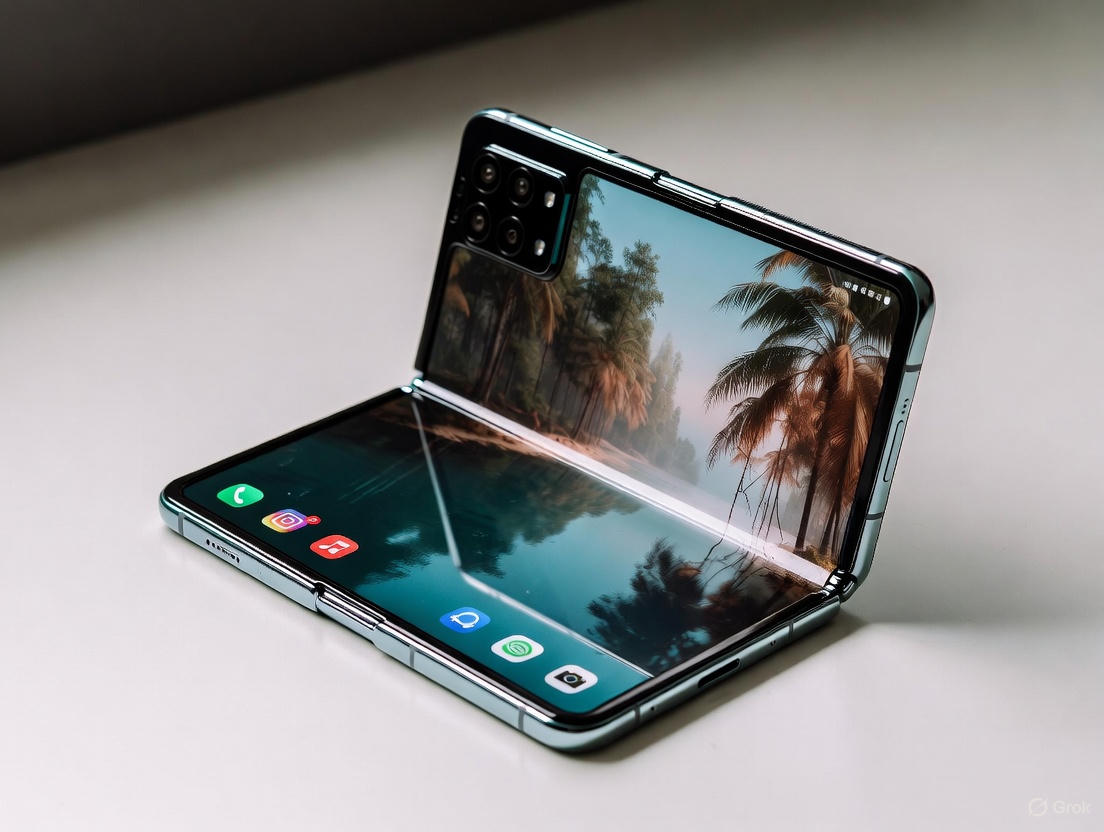
Once considered science fiction, foldable phones are now one of the most talked-about innovations in the smartphone industry. Combining the portability of a smartphone with the screen size of a tablet, these devices have redefined how we interact with technology. From Samsung’s Galaxy Z Fold series to Google’s Pixel Fold, and Huawei’s Mate X line, foldables are evolving rapidly — offering flexible screens, durable hinges, and advanced multitasking features.
The question isn’t “Are foldable phones the future?” but rather “How soon will they replace traditional smartphones?” Let’s explore the evolution, technology, advantages, challenges, and the bright future of this revolutionary mobile form factor.
The Evolution of Foldable Phones
Foldable phones didn’t emerge overnight. The journey began with flexible OLED displays, which allowed manufacturers to experiment with new designs.
From Concepts to Reality
- 2013: Samsung showcased its first flexible display prototype called Youm.
- 2018: Royole released the world’s first commercial foldable smartphone — FlexPai.
- 2019: Samsung launched the Galaxy Fold, marking the official debut of the foldable phone era.
- 2020–2025: Major brands like Huawei, Motorola, Oppo, and Google joined the foldable race.
Technological Breakthroughs
- Flexible OLED displays made from ultra-thin glass.
- Advanced hinge mechanisms allowing 200,000+ folds.
- Optimized UI/UX designed for both folded and unfolded states.

How Foldable Phones Work: The Technology Behind the Fold
Foldable phones rely on several key innovations that enable flexibility without compromising performance or durability.
1. Flexible OLED Displays
OLED (Organic Light Emitting Diode) panels can be made on flexible substrates, allowing them to bend without breaking.
2. Ultra-Thin Glass (UTG)
Manufacturers use a thin layer of glass (less than 0.03mm) to protect the screen while maintaining flexibility.
3. Hinge Design Engineering
Precision-engineered hinges allow smooth folding, often reinforced with cam mechanisms or liquid metal alloys.
4. Adaptive Software
Operating systems like Android have evolved to support foldable displays with multi-window functionality, drag-and-drop features, and app continuity.
Advantages of Foldable Phones
Foldable phones offer a wide range of benefits that make them appealing to power users and tech enthusiasts alike.
1. Bigger Screen, Smaller Footprint
Foldable designs provide tablet-sized displays that fold into pocket-sized devices.
2. Enhanced Productivity
Multitasking is seamless — users can run multiple apps simultaneously, making foldables perfect for business users.
3. Immersive Entertainment
Streaming, gaming, and reading become more enjoyable on larger displays.
4. Innovative Design Appeal
Foldables stand out for their futuristic aesthetics, appealing to trendsetters and early adopters.
Limitations and Challenges of Foldable Phones
While the technology is impressive, it still faces challenges that limit widespread adoption.
1. Durability Concerns
Despite improvements, hinge mechanisms and flexible displays remain vulnerable to wear and tear.
2. Higher Price Points
Foldable phones are expensive due to the complex technology and manufacturing process.
3. App Optimization
Not all apps are optimized for foldable interfaces, leading to inconsistent experiences.
4. Battery Life
Large screens consume more power, and batteries are difficult to optimize within compact, foldable designs.
Market Trends: The Global Foldable Phone Boom
The global foldable phone market has seen tremendous growth over the last few years.
Market Highlights
- 2023: Over 20 million foldable units shipped worldwide.
- 2025 (Forecast): Expected to surpass 35 million shipments, led by Samsung, Huawei, and Xiaomi.
- Regional Demand: Asia-Pacific leads in adoption, followed by North America and Europe.
Consumer Insights
According to a Counterpoint Research study, over 60% of consumers would consider a foldable phone if prices dropped below $1000.

Leading Foldable Phones in 2025
Here are some top-performing models in 2025 that define innovation and performance:
| Brand | Model | Key Feature | Price (USD) |
| Samsung | Galaxy Z Fold 6 | 7.8″ display, Snapdragon 8 Gen 3 | $1,699 |
| Pixel Fold 2 | Pixel-exclusive AI features | $1,499 | |
| Huawei | Mate X5 | Thin design, long battery life | $1,599 |
| Oppo | Find N3 Flip | Best compact foldable | $999 |
| Motorola | Razr 50 Ultra | Nostalgic clamshell design | $899 |
The Future of Foldable Phones
The next phase of foldable technology focuses on durability, affordability, and innovation.
1. Rollable and Stretchable Displays
Brands like LG and TCL are working on rollable devices that extend rather than fold.
2. Eco-Friendly Materials
Manufacturers are investing in recyclable polymers and energy-efficient components.
3. Integration with AI
Expect foldables with AI-powered adaptive displays, automatically adjusting layout and brightness for optimal usability.
Foldable Phones vs Traditional Smartphones

Environmental Impact of Foldable Phones
Foldable phones also bring sustainability considerations. While more materials are used per device, companies are reducing electronic waste through modular designs and recyclable components. Samsung’s Galaxy for the Planet initiative, for instance, uses ocean-bound plastics and recycled glass.
Tips for Buying the Right Foldable Phone
- Check durability certifications like IPX8 water resistance.
- Test the hinge mechanism for smooth folding.
- Compare screen brightness and refresh rate.
- Ensure software optimization for your most-used apps.
- Consider long-term updates and warranty.
Frequently Asked Questions (FAQs)
Q1. Are foldable phones durable?
Yes, modern foldables use ultra-thin glass and improved hinges, making them much more durable than earlier models.
Q2. Do foldable phones support 5G?
Absolutely. Nearly all 2024–2025 foldable models come with full 5G support.
Q3. Are foldable phones worth the price?
If you value multitasking, large screens, and cutting-edge design, foldables offer great value for tech enthusiasts.
Q4. Which foldable phone is best in 2025?
The Samsung Galaxy Z Fold 6 and Google Pixel Fold 2 are top contenders for performance and durability.
Q5. Can foldable phones be repaired easily?
They are more complex to repair than standard phones, but official service centers now offer specialized hinge and screen repairs.
Q6. What’s the future of foldable technology?
The future includes rollable, stretchable, and even transparent displays integrated with AI-powered features.
Conclusion: Foldable Phones Are Shaping the Future
Foldable phones represent more than just a tech fad — they symbolize the next evolution of personal computing. As durability improves and prices drop, these innovative devices will likely become mainstream within the next few years. Whether you’re a business professional or a casual user, foldable phones offer the flexibility and power to match your lifestyle.