Introduction to 5G Technology
5G technology is redefining how the world connects, communicates, and consumes digital services. As the fifth generation of wireless communication, 5G technology delivers ultra-fast speeds, ultra-low latency, and massive connectivity, enabling innovations that were impossible with previous networks.
In the first decade of smartphones, networks focused mainly on faster downloads. Today, 5G technology goes far beyond speed—it forms the backbone of smart cities, autonomous vehicles, remote healthcare, and industrial automation.
Also learn about 5G network, wireless technology, 5G applications, 5G benefits, future of 5G.
What Is 5G Technology?
5G technology is the fifth generation of mobile network technology, designed to connect not just people, but also machines, sensors, and systems at massive scale.
Unlike earlier networks, 5G technology supports:
- Gigabit-level speeds
- Near-zero response time
- Millions of connected devices per square kilometer
This makes 5G technology a foundational pillar of the digital economy.
How 5G Technology Works
5G technology uses advanced radio frequencies, smart antennas, and network virtualization to deliver superior performance.
Key Technical Components
- Small Cells: Compact base stations that improve coverage and capacity
- Beamforming: Directs signals precisely to users
- Network Slicing: Creates virtual networks for specific use cases

Together, these technologies allow 5G technology to handle high-density environments efficiently.
Key Features of 5G Technology
A strong understanding of features is essential in evaluating 5G technology.
1. Ultra-High Speed
Download speeds can exceed 10 Gbps, making high-resolution streaming and cloud computing seamless.
2. Low Latency
Latency as low as 1 millisecond, critical for real-time applications like remote surgery and autonomous driving.
3. Massive Device Connectivity
Supports millions of devices simultaneously without congestion.
4. High Reliability
Consistent performance even in crowded environments.
5G vs 4G: What’s the Difference?
| Feature | 4G | 5G Technology |
| Speed | Up to 100 Mbps | Up to 10 Gbps |
| Latency | 30–50 ms | 1–10 ms |
| Device Capacity | Limited | Massive |
| Use Cases | Mobile internet | Smart ecosystems |
This comparison shows why 5G technology is a paradigm shift, not just an upgrade.
Types of 5G Technology Networks
1. Low-Band 5G
- Wide coverage
- Moderate speed improvement
2. Mid-Band 5G
- Balanced speed and coverage
- Most widely deployed
3. High-Band 5G (mmWave)
- Extremely high speeds
- Short range, dense infrastructure
Understanding these types helps users maximize 5G technology performance.
Benefits of 5G Technology
5G technology offers benefits across industries and everyday life.
Major Advantages
- Faster mobile experiences
- Improved remote work tools
- Enhanced gaming and streaming
- Better emergency response systems
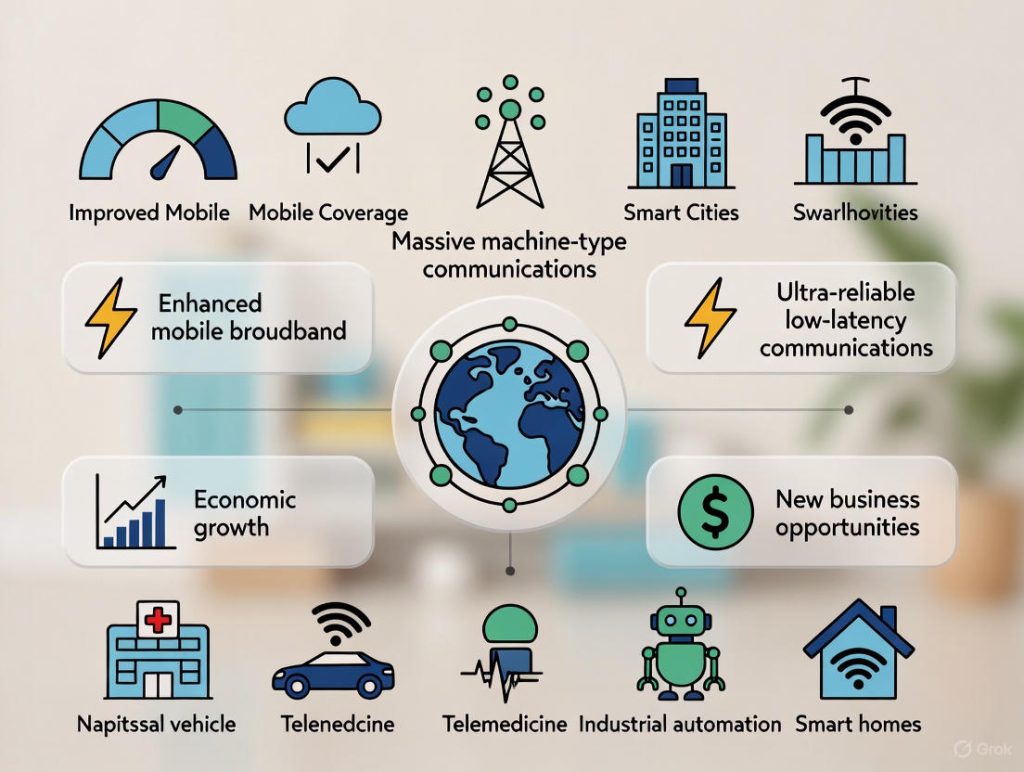
Real-World Applications of 5G Technology
5G technology is already transforming multiple sectors.
Healthcare
- Remote diagnostics
- Real-time patient monitoring
Transportation
- Autonomous vehicles
- Smart traffic management
Manufacturing
- Smart factories
- Predictive maintenance
Entertainment
- Cloud gaming
- AR/VR streaming
How to Use 5G Technology Effectively (HowTo Schema Section)
HowTo: Get the Best Performance from 5G Technology
Step 1: Use a 5G-compatible device
Step 2: Ensure your area has 5G coverage
Step 3: Enable 5G in network settings
Step 4: Use apps optimized for high-speed networks
Step 5: Monitor data usage regularly
This HowTo approach ensures optimal 5G technology performance.
Challenges and Limitations of 5G Technology
Despite its promise, 5G technology has limitations.
Key Challenges
- Infrastructure costs
- Limited rural coverage
- Device compatibility
- Energy consumption
Addressing these challenges is critical for widespread adoption.
5G Technology and the Internet of Things (IoT)
5G technology is the backbone of IoT growth.
Key IoT Benefits
- Real-time data processing
- Smart homes and cities
- Industrial automation
Security and Privacy in 5G Technology
Security is a major focus in 5G technology deployment.
Security Enhancements
- Advanced encryption
- Secure authentication
- Network isolation
While no system is risk-free, 5G technology introduces stronger protections than previous generations.
Future of 5G Technology
The future of 5G technology includes:
- AI-powered networks
- Integration with edge computing
- Expansion into rural regions
- Support for next-generation applications
FAQs on 5G Technology (FAQ Schema Ready)
What is 5G technology used for?
5G technology enables high-speed connectivity for mobile devices, smart cities, healthcare, and automation.
Is 5G technology safe?
Yes, 5G technology operates within international safety standards and regulations.
Does 5G technology consume more data?
Yes, faster speeds can increase data usage, especially for streaming and gaming.
Do I need a new phone for 5G technology?
Yes, a 5G-enabled device is required to access 5G technology.
Is 5G technology available everywhere?
Coverage is expanding, but availability varies by region.
Will 5G replace Wi-Fi?
No, 5G technology complements Wi-Fi rather than replacing it.
Final Thoughts on 5G Technology
5G technology is more than faster internet—it is a foundation for digital transformation. From enabling smart cities to supporting immersive digital experiences, 5G technology is shaping the future of communication, innovation, and global connectivity.