Introduction to AI Bookkeeping Tools
AI bookkeeping tools are rapidly transforming the way businesses manage their financial records. Traditional bookkeeping methods are often time-consuming, error-prone, and heavily dependent on manual data entry. AI bookkeeping tools eliminate many of these challenges by automating routine accounting tasks and delivering real-time financial insights.
In the first 10% of this article, it’s clear that AI bookkeeping tools are no longer experimental. They are practical, accessible, and increasingly essential for businesses that want to save time, reduce costs, and maintain accurate financial data.
What Are AI Bookkeeping Tools?
AI bookkeeping tools are software solutions that use artificial intelligence, machine learning, and automation to manage bookkeeping tasks. These tools automatically record transactions, categorize expenses, reconcile accounts, and generate financial reports.
In simple terms:
AI bookkeeping tools replace repetitive manual accounting work with intelligent automation.
They integrate with bank accounts, payment platforms, invoicing systems, and accounting software to provide a unified financial view.
AI Accounting Tools: Finance Automation
Why AI Bookkeeping Tools Are Gaining Popularity
The rapid adoption of AI bookkeeping tools is driven by several factors:
- Increasing transaction volumes
- Demand for real-time financial visibility
- Shortage of skilled accounting professionals
- Need for compliance and accuracy
- Growth of small and digital businesses
AI bookkeeping tools help organizations stay agile while maintaining financial control.
How AI Bookkeeping Tools Work
Understanding how AI bookkeeping tools function helps businesses trust and adopt them.
Core Working Process
- Data collection from financial sources
- AI-driven transaction categorization
- Pattern recognition and anomaly detection
- Automated reconciliation
- Real-time reporting and insights
By continuously learning from data, AI bookkeeping tools become more accurate over time.
Key Features of AI Bookkeeping Tools
Modern AI bookkeeping tools include a wide range of features designed to simplify accounting.
Essential Features
- Automated expense categorization
- Bank and credit card reconciliation
- Invoice processing
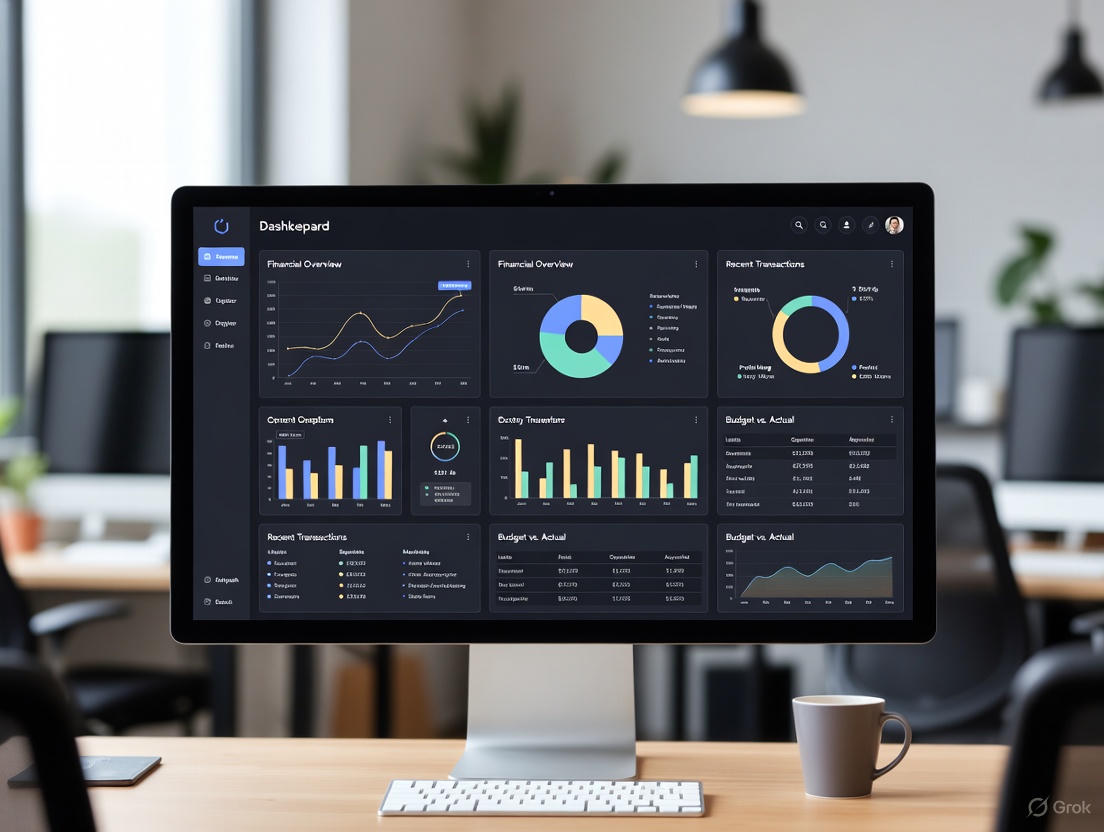
- Real-time dashboards
- Tax and compliance support
Advanced Features
- Predictive cash flow analysis
- Fraud detection
- Smart alerts and recommendations
- Natural language queries

These features make AI bookkeeping tools powerful yet easy to use.
Benefits of Using AI Bookkeeping Tools
AI bookkeeping tools offer measurable advantages across organizations.
Major Benefits
- Reduced manual work
- Improved accuracy
- Faster financial closing
- Real-time insights
- Lower operational costs
Businesses using AI bookkeeping tools can focus more on strategy and growth rather than administrative tasks.
AI Bookkeeping Tools for Small and Large Businesses
AI bookkeeping tools are flexible and scalable.
For Small Businesses
- Affordable cloud-based solutions
- Easy setup and minimal training
- Better financial visibility
For Large Enterprises
- High-volume transaction handling
- Advanced analytics and reporting
- Integration with ERP systems
Accounting Automation Software 2025
This scalability makes AI bookkeeping tools suitable for organizations of all sizes.
AI Bookkeeping Tools vs Traditional Bookkeeping
Comparing AI bookkeeping tools with traditional bookkeeping highlights their value.
| Feature | Traditional Bookkeeping | AI Bookkeeping Tools |
| Data Entry | Manual | Automated |
| Accuracy | Human-dependent | AI-enhanced |
| Reporting | Periodic | Real-time |
| Scalability | Limited | Highly scalable |
| Cost Efficiency | Higher | Lower over time |
AI bookkeeping tools clearly outperform traditional methods in speed and efficiency.
How to Choose AI Bookkeeping Tools (HowTo Schema Section)
HowTo: Select the Best AI Bookkeeping Tools
Step 1: Identify your bookkeeping needs
Step 2: Check integrations with existing systems
Step 3: Evaluate automation and AI capabilities
Step 4: Review security and compliance features
Step 5: Compare pricing and support options
Following this HowTo process ensures you choose AI bookkeeping tools aligned with your business goals.
Implementation Challenges and Solutions
Despite their benefits, AI bookkeeping tools can present challenges.
Common Challenges
- Data migration issues
- Resistance to automation
- Initial learning curve
- Integration complexity
Solutions
- Start with pilot projects
- Provide user training
- Clean historical data
- Choose vendor-supported tools
Addressing these issues ensures successful adoption.
Role of Machine Learning and Automation in AI Bookkeeping
Machine learning is the intelligence behind AI bookkeeping tools.
Key Capabilities
- Learning transaction patterns
- Improving categorization accuracy
- Detecting anomalies
- Predicting financial trends

Automation allows AI bookkeeping tools to operate continuously with minimal human intervention.
Future Trends in AI Bookkeeping Tools
The future of AI bookkeeping tools is promising.
Emerging Trends
- Voice-based bookkeeping commands
- Deeper tax automation
- Real-time compliance monitoring
- AI-driven financial forecasting
- Embedded analytics
AI bookkeeping tools will evolve from record-keeping systems into intelligent financial advisors.
Best Practices for Using AI Bookkeeping Tools
To maximize value, businesses should follow best practices.
Best Practices
- Regularly review automated entries
- Maintain clean financial data
- Use dashboards for decision-making
- Combine AI insights with human judgment
FAQs on AI Bookkeeping Tools (FAQ Schema Ready)
What are AI bookkeeping tools used for?
AI bookkeeping tools automate bookkeeping tasks such as transaction recording, reconciliation, and reporting.
Are AI bookkeeping tools accurate?
Yes, they improve accuracy over time through machine learning, though human review is still recommended.
Can small businesses use AI bookkeeping tools?
Yes, many AI bookkeeping tools are designed specifically for small and medium-sized businesses.
Do AI bookkeeping tools replace accountants?
No, they support accountants by reducing manual work and enhancing insights.
Are AI bookkeeping tools secure?
Most tools use encryption and compliance standards to protect financial data.
What is the future of AI bookkeeping tools?
Future tools will offer predictive insights, deeper automation, and real-time compliance monitoring.
Conclusion: Are AI Bookkeeping Tools Worth It?
AI bookkeeping tools represent a major shift in how businesses manage finances. By combining automation, intelligence, and real-time insights, AI bookkeeping tools help organizations reduce costs, improve accuracy, and make better financial decisions.
As technology continues to evolve, AI bookkeeping tools will become a standard part of modern financial management—making them a smart investment for businesses seeking efficiency and growth.