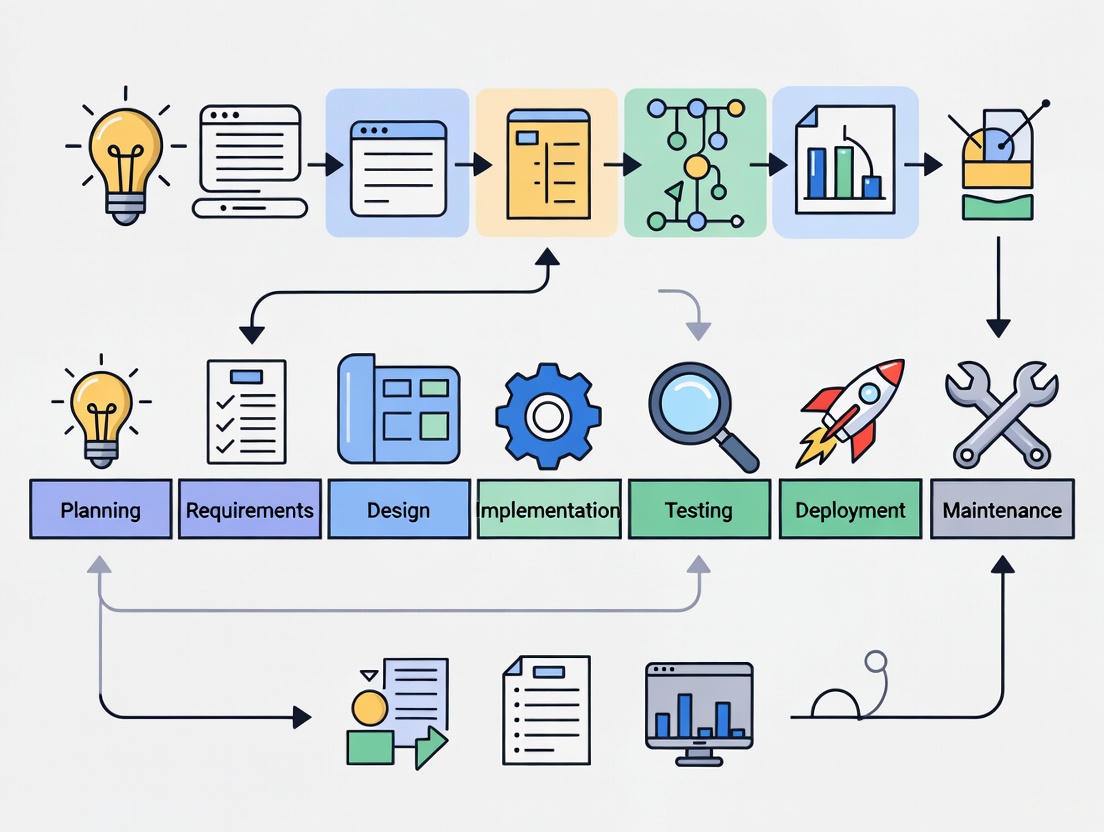
Introduction to Software Development
Software development is the foundation of today’s digital world. From mobile applications and websites to enterprise systems and cloud platforms, software development enables technology to solve real-world problems. Every digital interaction—online shopping, banking, communication, or entertainment—relies on well-designed software.
Within the first 10% of this article, it’s clear that software development is more than just writing code. It is a structured process that combines creativity, logic, and technology to build reliable, scalable, and secure applications.
What Is Software Development?
Software development is the process of designing, creating, testing, deploying, and maintaining software applications. It involves converting user needs into functional digital solutions using programming languages, frameworks, and tools.
In simple terms:
Software development transforms ideas into working software systems.
It includes everything from small scripts to complex enterprise-level applications.
Doge Software Licenses Audit HUD: The Ultimate Guide to License Compliance and Digital Transparency
Importance of Software Development in the Digital Era
Software development plays a critical role in modern society.
Why Software Development Matters
- Enables digital transformation
- Improves business efficiency
- Enhances customer experiences
- Drives innovation and automation
- Supports data-driven decisions
Organizations that invest in software development gain a competitive advantage in speed, scalability, and adaptability.
Types of Software Development
Understanding different types of software development helps businesses choose the right approach.
1. Web Software Development
Focuses on websites and web applications accessible through browsers.
2. Mobile Software Development
Involves building apps for smartphones and tablets.
3. Desktop Software Development
Creates applications installed on personal computers.
4. Enterprise Software Development
Develops large-scale systems for organizations.
5. Embedded Software Development
Designs software for hardware devices and machines.
Each type of software development serves unique user needs.
Software Development Life Cycle (SDLC)
The Software Development Life Cycle defines the stages of software development.
Key SDLC Phases
- Requirement analysis
- Planning
- Design
- Development
- Testing
- Deployment
- Maintenance
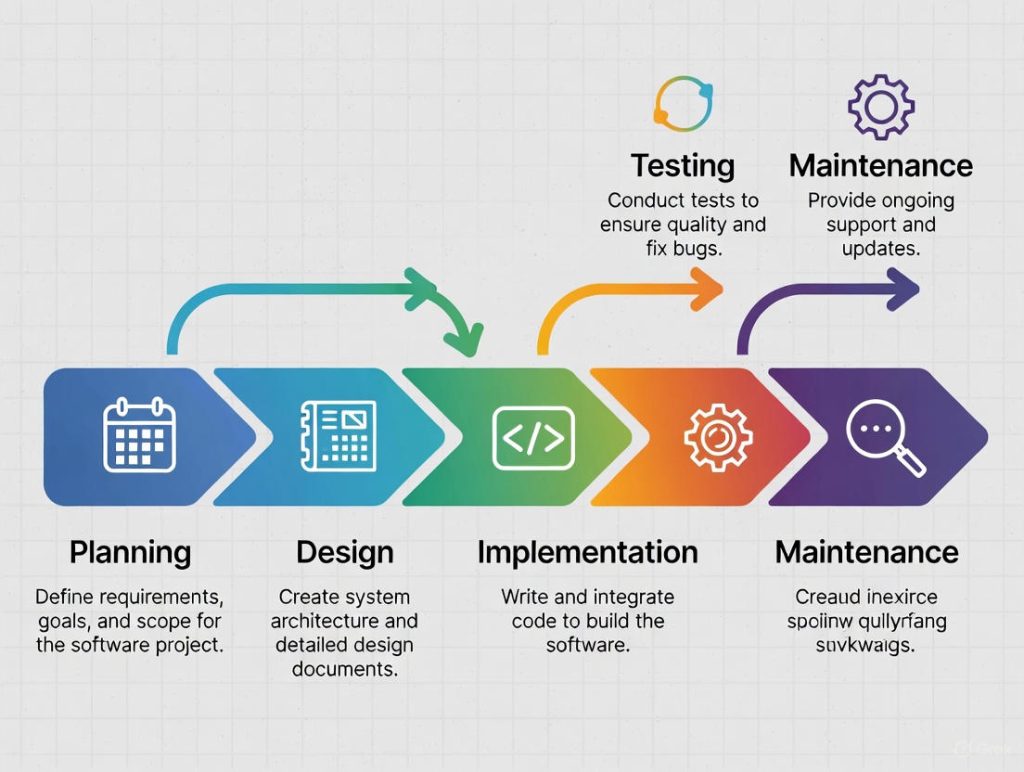
Following SDLC ensures structured, efficient, and high-quality software development.
Popular Software Development Methodologies
Software development methodologies guide how projects are executed.
Common Methodologies
- Waterfall: Linear and sequential
- Agile: Iterative and flexible
- Scrum: Agile framework with sprints
- DevOps: Integrates development and operations
Agile and DevOps dominate modern software development due to speed and adaptability.
Key Tools Used in Software Development
Effective software development relies on powerful tools.
Development Tools
- Code editors and IDEs
- Version control systems
- Testing frameworks
- Deployment tools
- Project management software
These tools streamline workflows and improve collaboration.
Benefits of Software Development for Businesses
Software development delivers measurable business value.
Business Benefits
- Process automation
- Cost reduction
- Improved customer engagement
- Data security
- Scalability and flexibility
Custom software development aligns technology with specific business goals.
How to Start Software Development (HowTo Schema Section)
HowTo: Begin a Software Development Project
Step 1: Define clear requirements and goals
Step 2: Choose the right development approach
Step 3: Select appropriate technologies
Step 4: Build and test incrementally
Step 5: Deploy and maintain the software
This HowTo approach ensures a structured and successful software development journey.
Challenges in Software Development and Solutions
Despite its advantages, software development comes with challenges.
Common Challenges
- Changing requirements
- Budget constraints
- Security risks
- Skill gaps
- Project delays
Solutions
- Agile development practices
- Continuous testing
- Strong documentation
- Skilled team collaboration
Addressing these challenges improves software development outcomes.
Role of AI and Automation in Software Development
Artificial intelligence is transforming software development.
AI-Driven Improvements
- Automated code generation
- Intelligent testing
- Bug prediction
- Faster deployment

AI helps developers focus on creativity rather than repetitive tasks.
Future Trends in Software Development
The future of software development continues to evolve.
Emerging Trends
- Low-code and no-code platforms
- Cloud-native development
- Microservices architecture
- AI-powered development tools
- Increased cybersecurity focus
These trends make software development faster and more accessible.
Best Practices for Successful Software Development
To achieve long-term success, follow best practices.
Best Practices
- Clear communication
- Regular testing
- Secure coding standards
- Continuous learning
- User-focused design
Effective practices ensure sustainable software development.
FAQs on Software Development (FAQ Schema Ready)
What is software development used for?
Software development is used to create applications that solve problems and automate tasks.
Is software development difficult to learn?
It can be challenging, but with practice and guidance, it becomes manageable.
Which skills are needed for software development?
Programming, problem-solving, communication, and logical thinking.
What are the main types of software development?
Web, mobile, desktop, enterprise, and embedded software development.
How long does software development take?
It depends on project complexity, scope, and methodology.
Is software development a good career?
Yes, it offers strong demand, growth opportunities, and innovation.
Conclusion: The Value of Software Development
Software development is the backbone of modern technology. It powers innovation, enables digital transformation, and connects people and businesses worldwide. By understanding software development processes, tools, and best practices, organizations and individuals can build solutions that are efficient, secure, and scalable. As technology advances, software development will continue to shape the future—making it one of the most valuable and impactful fields in t